Yes, they matter
Every
Monday I post a new interview. The subject? It can be anything, and
that's the beauty of it! With "Interviews That Matter" my aim is to
provide exciting reading material for your next coffee break. I want to
explore topics as far-fetched as space travels, as nerdy as medieval
role playing and as outrageous as gay rights. My three proclamations are
to amaze, inspire and enlighten you.
Author Kim M. Kimselius on passionate writing
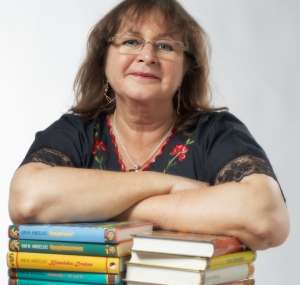
Kim M. Kimselius has a goal to write 100 books before she dies. Photo by Bertil Knoester.
Reviews often highlight how she fuses fiction with historical
facts. Her books can be found under the youth section, but the
enthralling writing attracts all ages. What’s the secret behind Kims’
passion of writing?
Kim M. Kimselius lives with her husband and three dogs, in a house in
the countryside. At the time of writing, she has released 26 books,
translated into six languages, including her debut
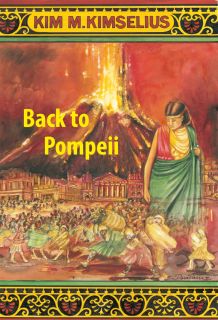
Back to Pompeii from
1997. The majority are about Theo and Ramona, two youngsters who travel
back in time to numerous exciting historical places and time periods.
But what’s driving her? Is it an urge to be seen, a need to teach and
share information – or just the inner satisfaction of seeing her
accomplishments lined up in a bookshelf?
Interviews That Matter: What does the “M” stand for?
Kim M. Kimselius: Mystique and magic is what I usually say. I build my lectures around the M, so I can’t tell.
ITM: Is being a writer living up to the expectations you may once have had?
KK: Yes, absolutely! My dream was to put my own
stories within hard covers in order to put them in my bookshelf. Then I
would proudly present them to others.
But I never dreamed of my books being published. With 11 000 copies
sold within the first week of my debut, I have to say that being a
writer exceeded my expectations by far.
ITM: What do you feel while writing?
KK: Enormous joy and creative desire.
I’m rich in life quality, since I get to do what I love. I’m rich in love since I get to be with the one I love.
ITM: Have you ever googled your own name?
KK: Loads of times! It’s a good way to find reviews
of my books. The first time I did it, I was impressed that I got 4 000
hits. At the most, I’ve had 200 000. It varies all the time.
ITM: Is it related to if you just released a new book?
KK: I don’t really know. Maybe it’s when there’s a new book, or maybe it’s when I’ve been out speaking a lot.
 ITM:
Whenever I read about you, you’re praised by readers and authors alike.
There’s never a bad word about you! Have you ever encountered any mean
comments that hurt you?
KK:
ITM:
Whenever I read about you, you’re praised by readers and authors alike.
There’s never a bad word about you! Have you ever encountered any mean
comments that hurt you?
KK: Thank you for the kind words, now you made me
even happier! Unfortunately there’s always people who can’t grant other
people success. I’ve had a few mean glitches, but they’re a very small
part of all the positive comments, so I don’t care much about them.
ITM: I don’t want to ruin your good mood, but do you have any examples?
KK: No, no examples. The few negative comments are instantly buried. Jealous voices is all they are.
ITM: You’ve already mentioned your lectures twice. You do a
lot of those. Can you live on your writing alone, or is lecturing a
must?
KK: I can live on my writing, but the lectures do
help in many ways. They give an increased income and spread the
knowledge about me and my books.
ITM: So they’re a marketing tool? What are they about?
KK: I do different kinds depending on what whoever
hires me wants. Historical ones, lectures about writing, about my books,
about being an author, writing courses, and so on. Of course those who
listen get curious about my books.
ITM: Which is your primary source of income?
KK: The books, definitely.
ITM: Are you rich?
KK: When people ask that question during lectures I
always answer yes! I’m rich in life quality, since I get to do what I
love. I’m rich in love since I get to be with the one I love. Money
isn’t wealth. I manage, and that’s what matters to me.
ITM: When your books are translated, do you have any part in it or do you have to blindly trust the translators?
KK: Unfortunately I have to blindly trust them,
since I don’t speak Slovenian, Finnish, Icelandic or Spanish. The
English one I’ve been more involved in.
ITM: Have you ever read any of your own books from cover to cover, after they’ve already been published and just for enjoyment?
KK: I’ve read them from cover to cover, something I
do every time it’s time to publish a new edition. But never for
enjoyment, there’s no time for that. No wait, that’s not true!
Boudica’s Battle with the Romans
I had to read since it got such great reviews, and some said it was
better than Twlight, which was the hottest book at the time.
ITM: So how does it feel as you stand there admiring your collection?
KK: Absolutely incredible! It warms my heart, my
stomach, my soul. It makes me shiver of joy when I see my books, and at
the same time I just want to write more to add to the bookshelf.
I forget to eat and shiver of anticipation to get the words down.
ITM: Which of all your books is your favorite?
KK: The flight from the terror of World War II
is a book I like a lot because I managed to find so many strong women
to include in it. As you know, my books are independent historical
adventures based on real historical facts, and real people. I loved the
portraits of women and how I managed to make them come to life in the
book.
But my absolute favorite is
The day everything changed. It’s
a completely different type of book, something I wrote in my youth. It
was laying in my drawer and after around 30 years it was finally
published.

Kim enjoying the pool water in Mexico during a study trip for one of her books.
ITM: Your books about the time travelling duo, Theo and
Ramona, range from ancient Egypt to the second world war. How do you
come up with the next place and time period to write about?
KK: It just comes to me. I get curious about a place or historical event, and then I just start gathering material.
ITM: It might be impossible to answer, but in ten years, what
new places do you believe your characters will have visited? You must
at least have some idea…
KK: It’s not impossible to answer, but I don’t want
to. There’s a plan, but I won’t give it up in advance. There’s always
some other book that comes in between, some custom order.
ITM: What books are such orders?
KK: The forgotten war 1808-1809 is one, and
A journey with Snapphanar another. The first was ordered by a cultural center in Finland, the other by four municipalities in Sweden.
ITM: I read that you get your inspiration from dreams. Examples?
KK: When I wake up in the morning I often have a
finished story in my head. Then I have to write the first and last
chapter down and write key parts for the rest. Then, the story has to
lie dormant for a while until I find the time to finish the whole thing.
Sometimes as I work on a book I dream and wake up with several chapters
complete in my head.
ITM: Are you so into your writing that it takes you over completely?
KK: Absolutely! When I’m in it I forget to eat and shiver of anticipation to get the words down.
ITM: Do you ever dream of new stories while working on
another one? Don’t they ever collide, and it all becomes too much to
handle?
KK: Of course it happens. But it’s never a problem.
As soon as I’ve written single chapters and key events, I put it aside
and keep working on the book that has to be done.
ITM: Say I want to become a writer. What do I do?
KK: If it’s your dream, all you need to do is sit
down and write the book inside you. Write from your heart. Write to
yourself, without any thoughts of others reading what you write. Don’t
mind spelling and grammar, just let the words flow. That’s when the
story will turn out the best! Don’t give up, even if a publisher sends
your manuscript back to you. Look it through and send it again. Good
luck!
ITM: Are those the final words of wisdom you want to end this interview with?
KK: Yes. Write from your heart, write for yourself, and write with passion!
To learn more about Kim and her books, visit her website.